
Can a blood sample reveal genetic changes in a tumour and help an oncologist consider what treatment might come next? In some cases, it can provide part of the answer without the need for another tissue biopsy. This approach is known as a liquid biopsy.
How does tumour DNA get into the bloodstream?
As cells break down, they release tiny fragments of DNA. Some of these fragments can enter the bloodstream. When they come from a tumour, they are known as circulating tumour DNA, or ctDNA.
A liquid biopsy looks for these fragments in plasma, the liquid part of the blood. By reading parts of the DNA sequence, a laboratory can look for genetic changes that routine blood tests cannot show.
How could this information help guide treatment?
Even among people with the same type of cancer, tumours can carry different genetic changes. Some of those changes help cancer cells grow. If testing identifies a change that a drug can target in that type of cancer, the oncologist can consider whether the treatment is suitable.
A liquid biopsy can also be useful when cancer grows or spreads despite treatment. Tumours can change over time, and some newly detected genetic changes may help explain why a treatment is no longer working as well as it did. The oncologist considers these findings alongside the type of cancer and the treatments the patient has already received.
When might a liquid biopsy be useful?
For someone with advanced cancer, a liquid biopsy may be worth considering if there is too little tissue left for genomic testing or if taking a new tissue sample would be difficult or risky. It can also help when the oncology team is reviewing treatment options after the cancer has progressed, or when a blood test could add information to an earlier tissue result.
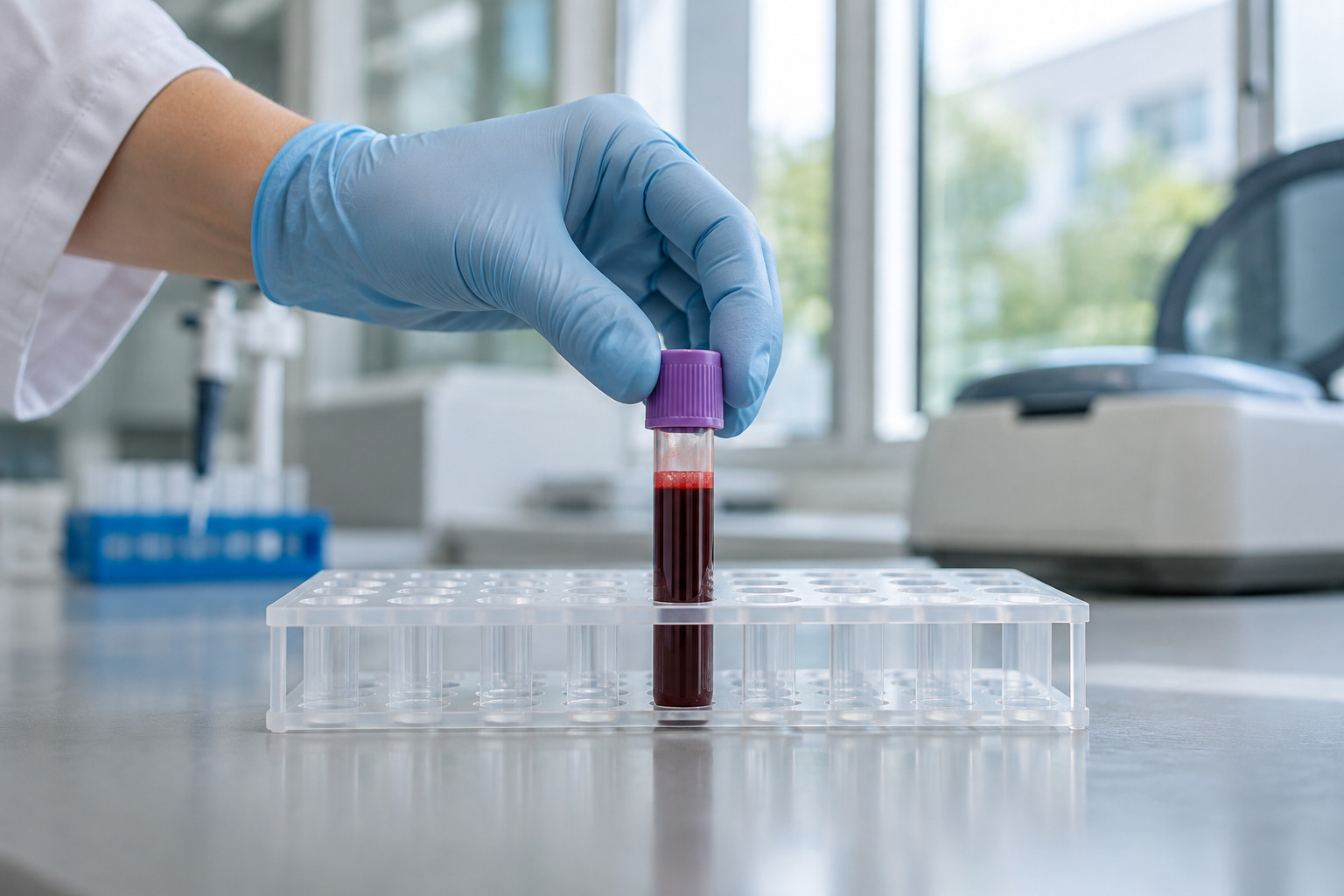
The sample is taken from a vein and collected specifically for the test.
Can a blood test replace a tissue biopsy?
A tissue sample lets a pathologist examine the cells under a microscope and helps establish what type of tumour it is. Tissue testing can also reveal molecular features that a blood test may miss.
Tumours release different amounts of DNA into the bloodstream. If there is very little tumour DNA in the sample, a liquid biopsy may miss a genetic change that is present in the tumour. This is why a result that finds no relevant changes may still leave an important question unanswered. If that question could affect treatment, the oncology team may consider testing tissue, where feasible. In some cases, blood and tissue results are most useful when read together.
Is TEMPUS xF+ available in Lithuania?
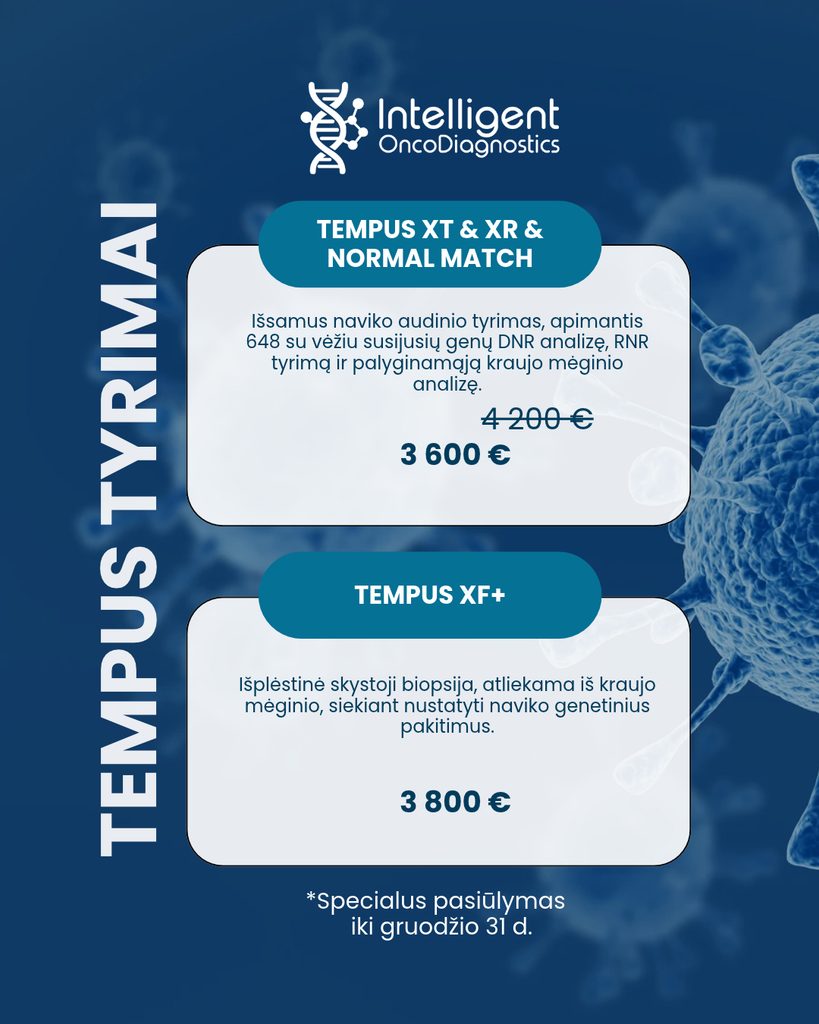
TEMPUS xF+ is a liquid biopsy test available through OncoDGN in Lithuania. It examines selected regions across 523 genes for genetic changes in advanced solid tumours. The findings can provide the oncology team with additional information when considering treatment options. The test is designed for tumour profiling in people with an established cancer diagnosis. It is not a cancer screening test.
If you would like to learn more about liquid biopsy or how TEMPUS testing is arranged in Lithuania, contact OncoDGN.